
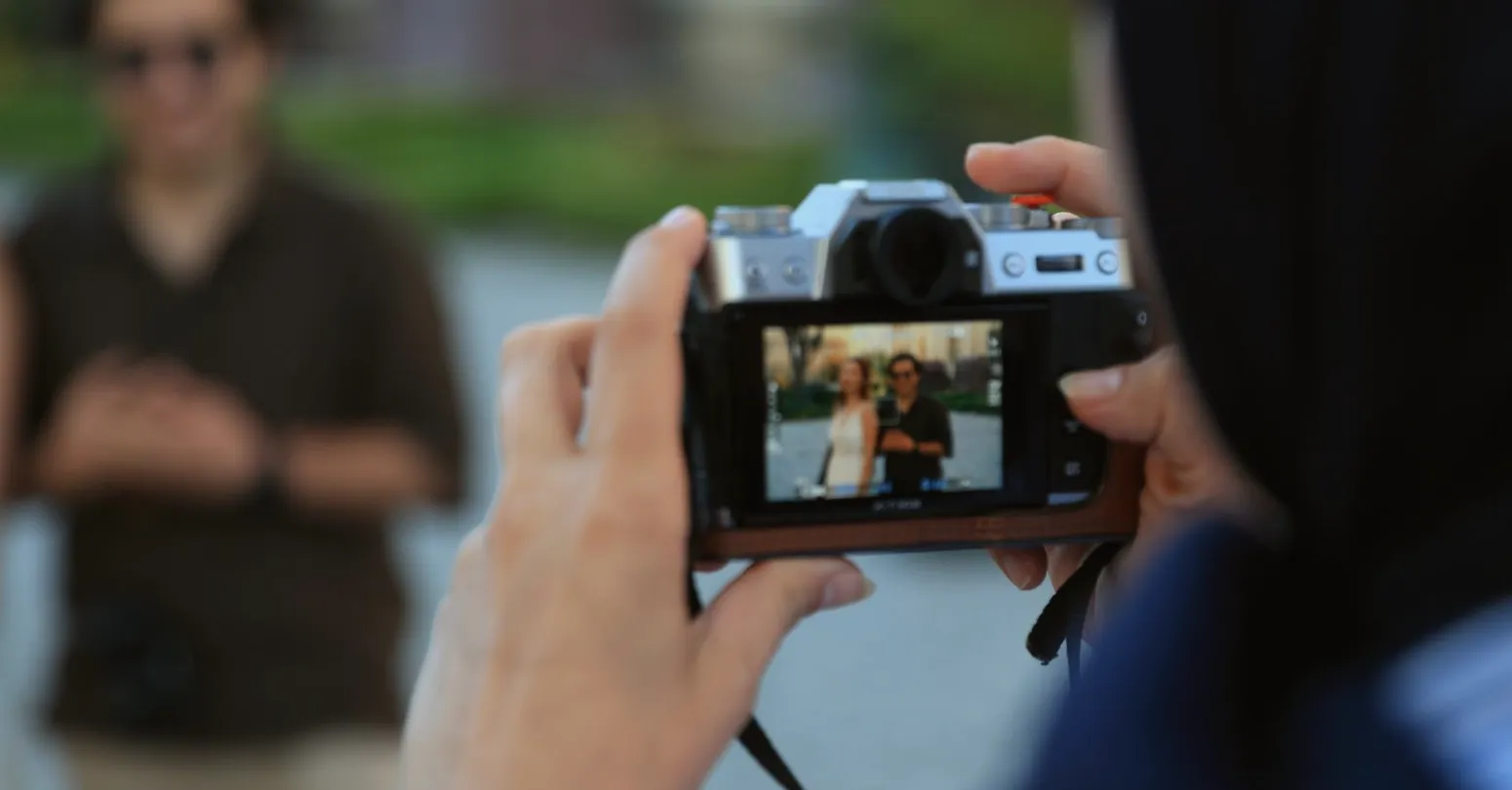
A Handheld Workshop for a Regional Newsroom: Dylan's Story
Dylan, a reporter who also shot his own pieces, joined a camera technique workshop with his colleagues. This short account follows what changed in his handheld shooting over a few weeks.
Where Dylan started
Dylan works as a reporter on a regional television desk, and like many reporters he is expected to shoot his own material when a camera operator is not free. When we first spoke he was candid about it. His footage was usable, he said, but editors kept trimming the first and last seconds of every clip because of wobble and late framing.
He asked whether a workshop could be built around the situations his colleagues actually faced rather than around studio exercises. That suited us. We agreed to run Camera Technique Training on site, with a small group of reporters and two staff camera operators, and to spend most of the time outside the building where light and pace are never under control.
Planning the session around real assignments
Before the day, Dylan sent over a handful of clips from recent stories, with a note on which ones the desk had struggled with. We watched them together with Gareth Pritchard, our senior camera operator, who leads the workshops. The same faults appeared again and again: shots that began mid-move, faces lost in shadow, and interviews framed too tight to cut around.
From that we drafted a plain running order. Mornings would cover handheld technique and framing, afternoons would cover light and short practice stories against a clock. Nothing was written up as a slide deck. Gareth wanted people holding cameras within the first fifteen minutes, because that is where habits are fixed or changed.
- Review of the desk's own recent clips
- Handheld and shoulder-mounted work in the morning
- Light and timed practice stories in the afternoon
What the day looked like
We began in the car park with no brief beyond walking and breathing. Gareth had each person walk a short route with the camera held close to the body, knees slightly bent, elbows tucked in. Dylan found it awkward at first, then noticed how much steadier the picture became when he stopped trying to hold the camera still with his arms alone.
After that we moved to framing. We worked on holding a shot for a full ten seconds before and after the action, so editors have room to cut. Dylan admitted this was the hardest discipline, because on a live story the instinct is to chase the next thing. Gareth's answer was simple: settle first, then move, and never start recording on a moving frame.
Light, sound and the clock
The afternoon was about conditions that cannot be fixed. A low autumn sun, a doorway with bright sky behind it, a street interview beside traffic. We showed the group how to turn a subject so the window falls on the face, how to read exposure on a bright background, and when to accept a flatter look rather than waste minutes on a perfect one.
Each reporter then shot a ninety-second practice story against a timer, from first question to a usable clip on the card. Dylan finished second to last and was unhappy with it, but when the group watched the clips back he saw that his steadiest shot came from the minute he slowed down. That mattered more to him than the speed.
- Turning the subject to the available light
- Checking exposure against a bright background
- Recording clean sound before the first question
A few weeks later
Some weeks on, Dylan wrote to say the desk's editors had stopped sending his clips back for reshoots, and that two colleagues had begun using the same hold-and-settle routine. He was careful not to claim more than that. The camera work was not perfect, he said, but it was predictable, and predictable footage is easier to cut under deadline.
He also mentioned that the practice stories had given the group a shared vocabulary. Instead of arguing about whether a shot was good, they now talked about whether it had a settled start and a usable end. For a small team with little time, a common language for footage turned out to be worth as much as any single tip.
What I took from it
Writing this up, I am struck by how little of the benefit came from equipment. Dylan used the same camera before and after. What changed was a set of habits around posture, patience and light, practised in conditions close to the ones he faces on a real story.
For our part, we learned to ask for a client's own clips before planning anything. They show the actual faults, not the textbook ones, and they let a workshop spend its hours on what the desk will notice on Monday morning. We will keep doing that, whatever the size of the group.
Dylan's case is a modest one, and that is why it is worth telling. A single day of handheld practice, built from a desk's own footage, left a small team shooting steadier pictures with cleaner starts and ends. If your reporters shoot for themselves, the useful question is not which camera they hold but which habits they bring to it. Those can be changed in a day outdoors.
Rhian Hughes
Founder and Head of ProductionRhian spent years in regional television newsrooms before founding glamorixa. She leads production planning and client work.
More from the News Desk
Headroom and Lead Room: Two Framing Terms for Handheld News Shooters
Two small framing terms, headroom and lead room, explained in plain words, with notes on how we teach them to reporters and camera staff shooting handheld on a deadline.
What a Newsroom Workflow Review at glamorixa Involves, Step by Step
Our workflow review follows a story from first tip to broadcast and ends with written recommendations your editors and producers can act on. This note explains how a review runs.